
- Admin
- 13 Oct, 2026
- Blog
What Is Pre-Nursery? A Simple Guide for Parents Before Admission
Your child may spend hours stacking blocks, asking questions, or listening to the same story again and again. Such little moments form part of the learning process for young kids. Pre-nursery classes use this curiosity to introduce children to a place where they can play, interact with other children, and adapt to a classroom environment. Understanding what pre-nursery means will assist parents in making an informed decision regarding this process.
At What Age Can a Child Start Pre-Nursery?
Most children enter pre-nursery between two and three years of age. However, there is no single admission rule followed by every school. Some institutions accept younger children, while others require them to meet a particular age by a specified date.
Before filling out an application form, one must check the school’s age criteria. Moreover, it would be useful to consider how your child deals with everyday situations. Can they communicate when they need something? Do they have any interest in toys, people, or new environments? Small details like these say a lot.
The child does not need to be fully independent yet. There might be problems with feeding, using the toilet, or settling down after becoming upset. The most important thing is to find the right school that can support these needs.
Parents can also read about the right age for preschool admission to better understand age eligibility and readiness.
What Happens in a Pre-Nursery Classroom?
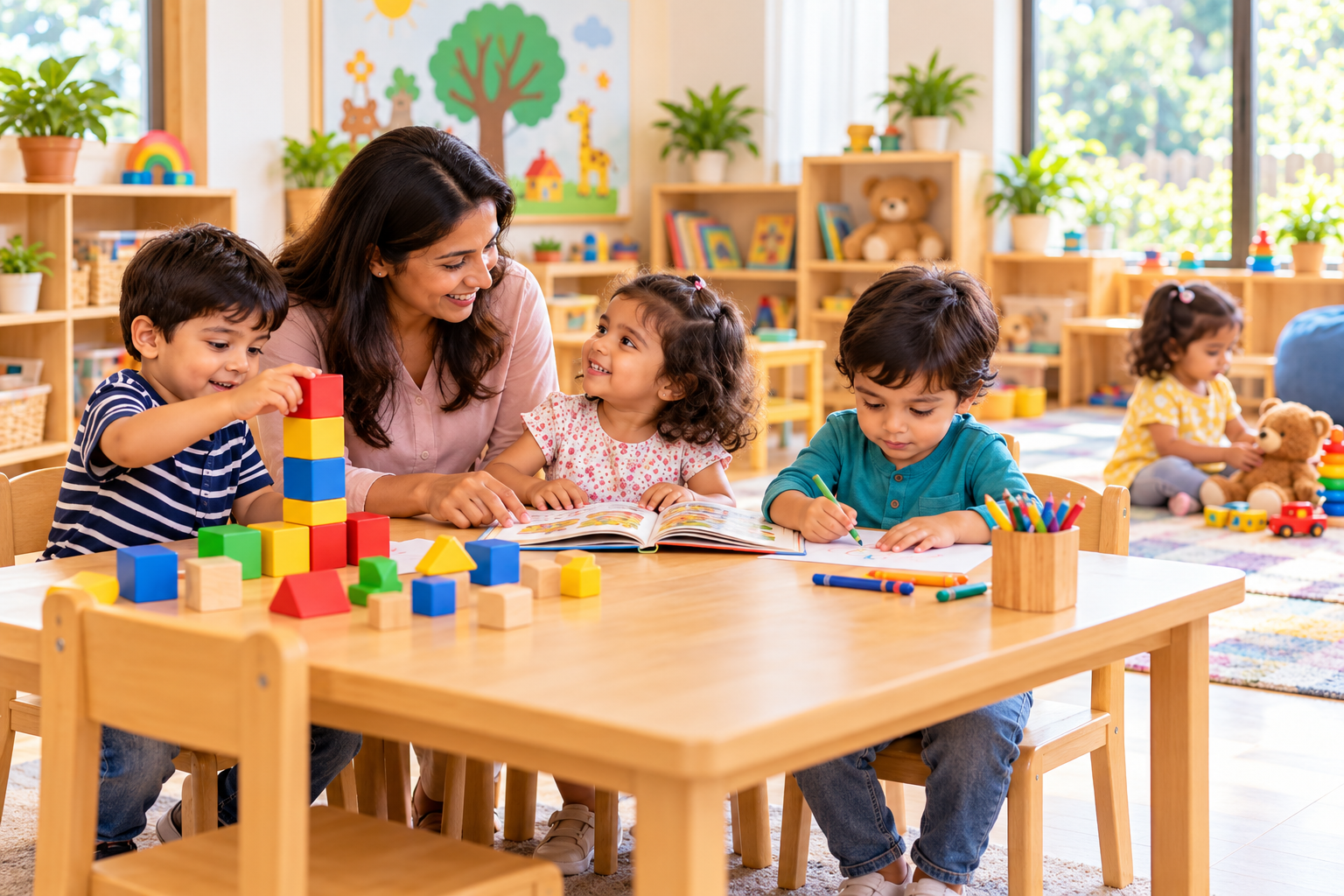
A pre-nursery classroom looks quite different from a primary school classroom. Instead of long lessons and written work, children spend much of their time exploring objects, listening to stories, moving around, and playing.
Common classroom activities include:
-
Talking and listening: Picture books, rhymes, and everyday conversations introduce words and help children express their needs.
-
Playing with others: Group games offer chances to share toys and interact with classmates.
-
Moving and creating: Activities such as dancing, drawing, and block construction assist in the development of coordination and creativity.
-
Exploring basic ideas: Matching objects and noticing shapes while counting toys introduce early concepts without formal lessons.
How Is Pre-Nursery Different from Nursery?
The main difference is the level of structure. Pre-nursery helps children get used to spending time in a classroom. Nursery usually follows pre-nursery and offers more structured learning activities.
For instance, a child in pre-nursery may hear a rhyme about animals and look at pictures of them. In nursery, he or she may start to name those animals, match them with their pictures, or say where they come from.
How Does Pre-Nursery Admission Work?
The pre-nursery admission process usually begins with an application and a check of the child's age eligibility. Schools may ask parents to submit documents and attend a short meeting. Some also arrange an informal interaction with the child.
The documents that are often asked for are a birth certificate, passport-size photographs, proof of address, and identification documents of the parents. The documents are not the same in all schools, so it is best to get the list from the school instead of preparing them according to another school's policy.
Other important points that you must consider are deadlines for admission, the timing of the classes, and any other charges besides the tuition fee. Try to visit the school before you pay the admission fee.
How Can You Help Your Child Get Ready?
There is no need to turn the weeks before admission into formal school preparation lessons. Ordinary daily routines and simple games at home are quite sufficient to start with.
Help your child practice putting toys in order, washing their hands, or carrying a small bag. Read picture books with your child and ask them to describe what they see. All these actions will prepare your child without any stress.
You can also speak about what will happen at school. Tell your child that there will be a teacher to assist them and other children to play with and that you will return to pick them up.
What Should Parents Check Before Choosing a School?
A colourful classroom may catch your attention, but there are other details worth checking. Ask about teacher training, the number of children in each class, supervision, cleanliness, and emergency procedures.
Find out how teachers handle common situations, such as a child refusing food, missing a parent, or struggling to share toys. Their answers can tell you a lot about the care children receive.
The pre-nursery age limit should also be confirmed before applying. During your visit, notice whether children have room to move, whether toys are suitable for their age, and how teachers speak to them. A friendly, patient approach matters more than an impressive-looking classroom.
Parents exploring early education options can also learn more about preschool in Gurgaon.
Conclusion
Starting pre-nursery is a choice, and parents are not required to compare their child's growth with other children. To understand what "pre-nursery" means, parents should acknowledge that learning at an early age takes place through play, discussion, and normal activities. Parents should check the admission criteria of the school, tour the classroom, and find out how their child will be taken care of. Sswings Preschool offers young learners opportunities to explore their surroundings, interact with others, and develop skills for the next stage of school.
Parents interested in early childhood education can contact Sswings Preschool to learn more about available programs, age eligibility, and admission requirements.
Frequently Asked Questions (FAQs)
Q1. What is pre-nursery?
Ans: It introduces young children to classroom learning through play and simple activities.
Q2. At what age can children join?
Ans: Most start between two and three years. Check the school's age criteria before applying.
Q3. Is pre-nursery compulsory?
Ans: No, admission depends on family choice and school requirements. Parents should consider their child's readiness.
Q4. What do children learn?
Ans: They practice speaking, sharing, counting, and creative play.
Q5. How can parents prepare?
Ans: Introduce simple routines and talk positively about school. Reading picture books together can also help.


Send a Message