- Admin
- 10 Aug, 2026
- Blog
Why is Preschool Important?
1. Building the Foundation for a Child’s Future
One major part of brain growth occurs before a child is five. In those early years, children soak in everything. From sight to sounds and each word. They are faster than we can keep up. This is a season where curiosity runs wild. Every “Why?” is an opportunity for exploration.
And preschool is supposed to come in at that moment. It is not babysitting or time-filling. It is about giving children a chance to try something. Fail safely and practice. Build habits that will become a part of who they are. Consider it less of an add-on and more of a launch pad for everything that follows.
2. Early Learning Starts Here
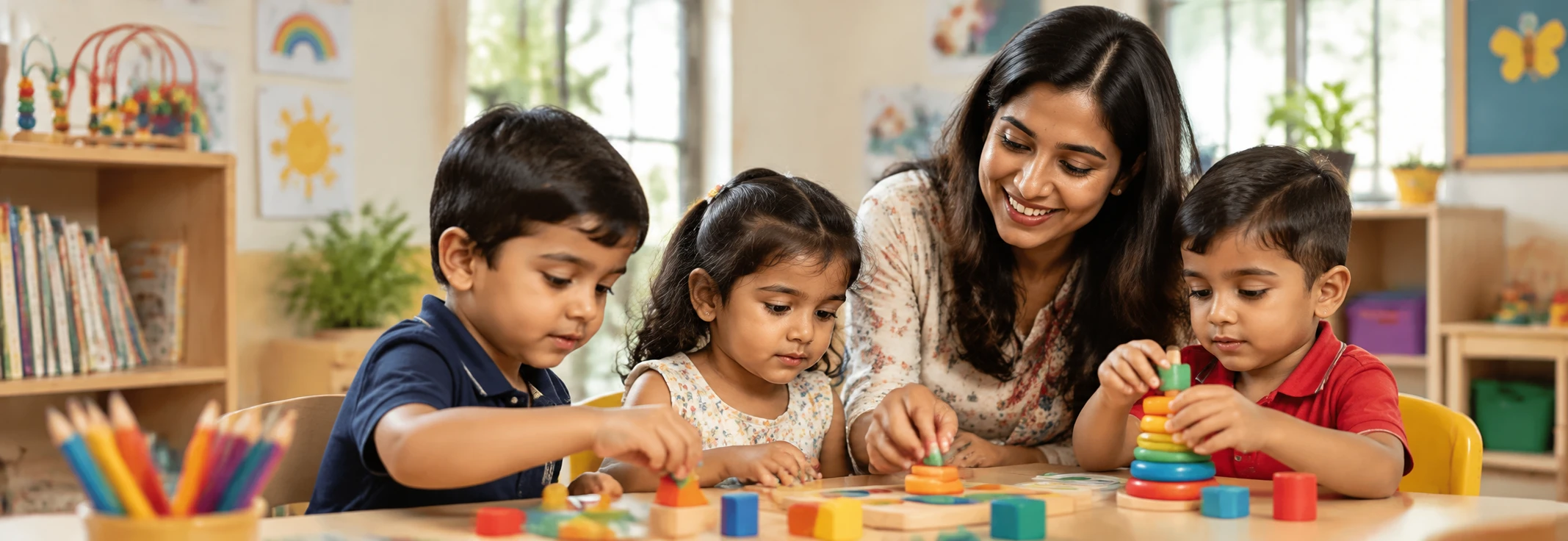
Preschool helps children put abstract ideas into something tangible they can touch, sing, or laugh about. The child might count toy cars as rolling down a track rather than being shown a number chart. Shapes do not come off a textbook; they board a puzzle, show up on a snack plate, or manifest while tracing playdough.
That’s the magic; learning sneaks in through play. Teachers set up songs, games, and activities so children can connect ideas with experiences. By the time they reach primary school, they’ve already got the basics of numbers, letters, and problem-solving under their belts without ever feeling like they were “studying.”
3. Social Skills and Emotional Growth
The thing here is: academics matter, but learning how to live alongside fellow human beings matters equally. Preschool is the first place most children meet a room full of peers who are not family members. There, they learn the more difficult skills-how to share toys and take turns, wait for their time to speak.
It is also the time when emotions begin to find reason. Maybe a teacher would guide the child to say, “I am frustrated,” instead of throwing blocks. Gradually, children gain confidence. They start to identify themselves as a part of a larger social group.
4. Language and Communication Skills
Young children talk endlessly, and preschool makes that chatter count—rhyming, silly songs, and the never-ending story time. Every bit of that helps expand the vocabulary. They learn new words to express what they want. What they feel and even what they imagine.
Listening sneaks in here, too. Preschool quietly teaches kids that communication isn’t only about talking; it’s about paying attention, waiting and responding. That balance is what helps them grow into strong communicators later.
5. Physical Development
Those small hands need practice. Cut paper, string beads, or colour inside (and sometimes outside) the lines to strengthen those muscles for holding a pencil someday with ease. Those fine motor skills may sound unspicy, but they make a difference when kids start writing.
Then there is the big stuff like running, climbing, and balancing. Outdoor play makes for coordination and strength. Kids learn habits such as washing hands before snacks and walking to stretch their legs instead of sitting tight in front of the screen. These habits become hard to undo once ingrained at an early age.
6. Preparing for School Life
Walking into a formal classroom can shock a child who’s never been away from home routines. Preschool softens that leap. Kids get used to simple schedules. Snack time and play time: Structure isn’t new when they start primary school.
They also learn patience in small doses. Lining up, waiting for their turn, or sticking with one task until it’s done. Even classroom manners like raising a hand or respecting a friend’s space. By the time “big school” starts, these kids already know the rhythm.
7. Boosting Creativity and Imagination
Put a box of crayons before a preschooler and observe what ensues. It does not draw as much as transforming those scribbles into full-blown stories. The preschool years tap that infinite imagination. Instances of role play become hospitals, kitchens, and even rocket ships. Storytelling becomes an opportunity to try out new roles and perspectives.
This supply of pretend time is a one-way problem-solving skill, and self-confidence is nurtured. Witnessing their ideas brought into existence leads to a child’s belief in their own voice.
8. Long-Term Benefits Backed by Research
Plenty of studies back up what parents and teachers already notice. Children who go through quality preschool often do better in reading and math later. They’re less likely to repeat a grade and more likely to finish high school.
But it is not just the report card. Preschoolers tend to adjust socially better, to be resilient when things do not go their way, and to communicate clearly. Some longitudinal studies follow correlations between preschool attendance and better opportunities to go to college and build steady careers. In a nutshell: The outcome is not something that diminishes. Instead, it drives forward.
9. Tips for Parents Choosing the Right Preschool
Here are some things parents could keep an eye out for as they search:
- It’s all about the teachers: Proper training and a warm environment should exist simultaneously. Children do well with adults who know about child development and deeply care about them.
- Look for balance: The best preschools manage to create and offer structured learning in an environment that encourages play and exploration in copious amounts.
- Stay involved: Ask teachers what your kid is doing. Encourage questioning. That home-school connection means a lot.
It is much more than mere convenience when choosing a preschool. The right preschool lays the foundation for everything that follows.
10. Conclusion: A Small Step with a Big Impact
Preschool may look like playtime to the untrained eye, but it’s much more. It is where letters, numbers, friendships, and independence come together. It is where kids begin building the confidence they’ll need for years to come.
For parents, enrolling a child in preschool isn’t just about filling a schedule. It is giving them a head start on life. And for families who want a trusted place, Sswings Preschool is one example of an environment where children can grow and learn from the beginning.
Send a Message